“This is a book about values, about poetry and music; about the spirit of
youth and a deep bond among those awaiting the hour of death. At times,
particularly when the writer describes the visits of his mother and father to
the prison, I cried – and sometimes I also laughed aloud.”
“Each Olympic Games is indivisible from the political, economic, social and cultural forces that shape it. The Olympics change as the world changes…
“In many ways the current era in Olympic history began at the Los Angeles Games in 1984. Four years previously the USA had failed to persuade most of the world to join it in boycotting the 1980 Moscow Games… Prior to that in 1976 the Montreal Games had been a huge loss-making commercial disaster for the city, and 1972’s Munich Games had been marked by terrorism. Something had to change if the Olympics were to survive. The early 1980s was the era of Reaganomics, and California was US President Reagan’s home state. What better place than Los Angeles to put the stamp of corporate America on the Five Rings and transform a symbol that was fast becoming damaged goods?
”This was the first Games where the profit motive was paramount. Sponsorship, endorsement, and product-placement deals were all signed with the global multinationals. Coca-Cola, McDonald’s and Mars Bar were the kind of brands that could provide the huge sums demanded. For such global products the Olympics provided the perfect promotional platform. This commodification of the Games inevitably had an impact on the athletes too. They demanded, with some degree of justification, that as their sporting efforts now sustained a highly profitable enterprise for a self-perpetuationg International Olympic Committee (IOC), they should have a share of the spoils. In 1986, two years after Los Angeles, the strict Olympian code of amateurism was summarily abandoned… Both processes, commericializaiton fo the Games and professionalization of the athletes, have been key to the dramatic trnasformation of the Olympics into what they are today.”
———————————————
Further Reading
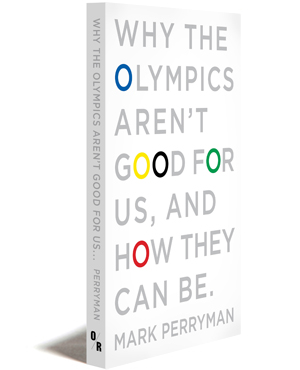
Why the Olympics Aren’t Good for Us, and How they Can Be
Mark Perryman
On the eve of the summer Olympics, sports activist and commentator Mark Perryman presents a sharply critical take on the way the Games have been organized and an imaginative blueprint for how they could be improved. More
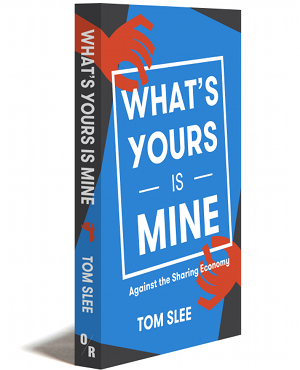
WHAT’S YOURS IS MINE
Against the Sharing Economy
Tom Slee
In What’s Yours Is Mine, Tom Slee argues that the new wave of companies known as the sharing economy, including tech giants Lyft, Airbnb, Taskrabbit, and Uber, is funded and steered by very old-school venture capitalists. More
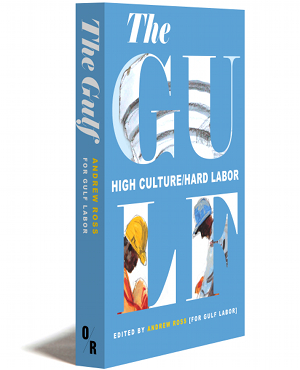
THE GULF
High Culture/Hard Labor
Edited by Andrew Ross for Gulf Labor
Collected in The Gulf is the work of the Gulf Labor Coalition, a group of writers and artists who have been pressuring Saadiyat Island’s Western cultural brands—including the Louvre, the Guggenheim, the British Museum and New York University—to ensure worker protections. More
“Recommended: Yes.This book outlines the history of extinction and critiques “solutions” to the problem from an anti-capitalist and anti-imperialist stance, offering useful concepts for thinking about extinction in relation to environmental and social justice.”
“Andrew and Alex Görlach (The European) discuss the original dream for artificial intelligence, how it’s lost sight of creating an artificial human mind, and more musings about the current state of AI, and where it’s going.”
“Dale posits love as the antithesis of narcissism and describes why contact with the real is so much more important than enveloping ourselves in fantasy. We talk hierarchy and class and why the Anthropocene will be better for some than for others.”
“By thinking through the periodization of extinction, these questions of power, agency, and the Anthropocene become more insistent. If we are discussing humanity’s role in obliterating the biodiversity we inherited when we evolved as a discrete species during the Pleistocene epoch, the inaugural moment of the Anthropocene must be pushed much further back in time than 1800. Such a move makes sense since the planet’s flora and fauna undeniably exercise a world-shaping influence when their impact is considered collectively and across a significant time span. Biologists have recently adopted such a longer view by coining the phrase “defaunation in the Anthropocene.” How far back, they ask, can we date the large-scale impact of Homo sapiens on the planet? According to Franz Broswimmer, the pivotal moment was the human development of language, and with it a capacity for conscious intentionality. Beginning roughly 60,000 years ago, Broswimmer argues, the origin of language and intentionality sparked a prodigious capacity for innovation that facilitated adaptive changes in human social organization. This watershed is marked in the archeological record by a vast expansion of artifacts such as flints and arrowheads. With this “great leap forward,” Homo sapiens essentially shifted from biological evolution through natural selection to cultural evolution.”
From 10,000 books in consideration, Scott Malcomson’s Splinternet, has made the shortlist for getAbstract’s International Book Award 2016, conferred in October at the Frankfurt Book Fair.
“getAbstract recommends his compelling overview and fascinating anecdotes to students, entrepreneurs, investors and policy makers who will benefit from this overlooked story’s rich information on where the Internet came from and cautionary notes about where it’s going.”
“One of Tom Slee’s motivations for writing What’s Yours Is Mine: Against the Sharing Economy—published in February by OR Books—was to push back against people in the tech industry appropriating the language of “collective action and progressive politics” for private financial gain. “I wrote this book because the Sharing Economy agenda appeals to ideals with which I and many others identify; ideals such as equality, sustainability, and community,” he writes. “The Sharing Economy continues to have the support and allegiance of many progressive-minded people … [but evokes] those ideals to build massive private fortunes, to erode real communities, to encourage a more entitled form of consumerism, and to create a future that is more precarious and more unequal than ever.”
…
Slee’s book provides much needed historical context on the sharing economy phenomenon: a history of digital “openness” being leveraged for private profit, as well as a history of the commodification of the internet, pointing out key moments in time where legislation changed to first allow commercial activity on the web. “There was vociferous argument over the ethics of pursuing profit over the internet,” he writes. It’s a book about the sharing economy, but also more: it’s about how we got to this conflicting place where we all are seemingly beholden to commercial platforms that we don’t totally understand, mined for data by corporations profiting from users’ micro-work.”
The question remains whether Hillary Clinton is the progressive, feminist candidate the left wants her to be—or simply a hawkish corporatist.
———————————————
On Monday night at the Democratic National Convention in Philadelphia, First Lady Michelle Obama and Senator Bernie Sanders both took the stage to voice their support of Hillary Clinton. Both the First Lady and Senator Sanders, perhaps to the disappointment of the latter’s fervent supporters, spoke strongly about why they believe Hillary deserves votes.
The First Lady was adamant that Hillary was the only candidate for the job, saying, “And I am here tonight because in this election, there is only one person who I trust with that responsibility—only one person who I believe is truly qualified to be President of the United States. And that is our friend, Hillary Clinton.”
Senator Sanders, on the other hand, struck a different note. “[T]he case he made for Clinton was less about a visceral appeal to liberal values than a dry, logical chain of argument that led (somewhat joylessly and amid boos) to the conclusion that Clinton deserved to be the nominee,” wrote Glenn Thrush of CNN. That was before Sanders tweeted on Monday:
We have got to defeat Donald Trump and do everything we can to elect Hillary Clinton to the White house. #DemsInPhilly
Some suggested the tweet belies the fact that Sanders is more interested in keeping Trump out of the White House than putting Hillary in it.
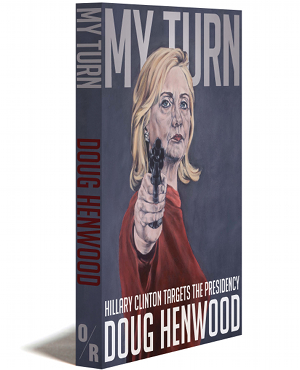
The incongruous messages from the First Lady and Senator Sanders—one of full-fledged support and character endorsement, the other of resignation and necessity—reflect the anxieties of many voters on the left for whom Hillary Clinton is seen as the last remaining option, an alternative to Donald Trump who is not as progressive as they might like; that, as Doug Henwood points out in My Turn: Hillary Clinton Targets the Presidency, “The case for Hillary boils down to little more than her alleged inevitability.”
Which begs the question, is Hillary the progressive, feminist candidate the left wants her to be? Or another hawkish, corporatist politician?
In My Turn, a critique from the left that catalogs the rumors, policy complaints, and ideological alignments that have dogged the candidate throughout her career, Henwood allows Hillary’s words to speak for themselves:
“As a shareholder and director of our company, I’m always proud of Wal-Mart and what we do and the way we do it better than anybody else.”
—June 1990, at the annual stockholders’ meeting
“For goodness’ sake, you can’t be a lawyer if you don’t represent banks.”
—March 1992. In her youth, Hillary interned at a radical law firm in Oakland, which, in Carl Bernstein’s words, was “celebrated for its defense of constitutional rights, civil liberates, and leftist cases.”
“Now that we’ve said these people are no longer deadbeats—they’re actually out there being productive—how do we keep them there?”
—April 2002. The “deadbeats” she’s referring to are former welfare recipients who’d (briefly, in many cases) found low-wage work.
“It’s time for the United States to start thinking of Iraq as a business opportunity.”
—June 2011, to an audience of senior executives from U.S. companies and officials from the U.S. and Iraqi governments.
“I love this quote. It’s from Mahatma Gandhi. He ran a gas station in Saint Louis for a few years.”
—January 2004. She later apologized, explaining it as a “lame attempt at humor.”
“The office of the president is such that it calls for a higher level of conduct than expected from the average citizen of the United States.”
—Written in 1974, as a staff lawyer drawing up the rules for the impeachment of Richard Nixon.
Hillary Clinton is running for the presidency with a message of hope and change. But, as Doug Henwood makes clear in this concise, devastating indictment, little trust can be placed in her campaign promises. More
Going Rouge
Richard Kim and Betsy Reed, Editors
Sarah Palin has many faces: hockey mom, fundamentalist Christian, sex symbol… More
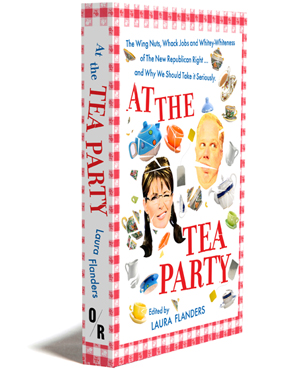
AT THE TEA PARTY
The Wing Nuts, Whack Jobs and Whitey-Whiteness of the New Republican Right… And Why We Should Take It Seriously.
Laura Flanders, Editor
“A lively and informed expose… At the Tea Party stands out as a must-read for anyone interested in the turbulent future of American politics.” —The NationMore
The news comes that in Tehran people have taken up arms and are taking over all the government buildings, including the state radio and television. They are storming the prisons and letting the political prisoners out along with thieves and murderers. Dark smoke is rising in different parts of the city. We gather outside along the road to Tehran and listen to a portable radio.
“Citizens of Tehran,” the announcer reads the latest declaration of the martial law authorities, “a curfew will be enforced from 4 o’clock this afternoon.”
It is already past 4:00 pm.
“In order to protect your lives and property, our brave troops are under strict orders to shoot without consideration subversive elements who defy this directive.” The radio played military marches and repeated the declaration. The workers at the General Electric plant were still demanding their back-pay.
The planning committee could not agree on a plan. Mohammad insisted that we had to stay there with the workers.
“The revolution will triumph,” he pleaded, “with or without us. No matter who rules the country, these workers will demand the same things.”
I was sympathetic to Mohammad, but could not ignore the bloodshed in the city. “We need to be there,” I said tersely. “What will we say when people later ask where were we during the uprising? What prison doors did we break? What military base did we conquer? What government building did we take over?”
Mohammad realized that he could not win this quarrel. He remained, while the rest of us headed back to the city to rejoice in the final triumph of the revolution.
Mohammad would be executed three years later.
Read More
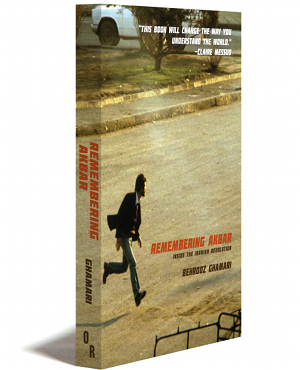
REMEMBERING AKBAR
Inside the Iranian Revolution
Behrooz Ghamari
Set in the tumultuous aftermath of the Iranian revolution in 1979, Remembering Akbar weaves together the stories of a group of characters who share a crowded death row cell in Tehran’s notorious Evin prison. More
The U.S. and Saudi Arabia seem to have very little in common. What is the origin of their strange alliance?
Over a period of decades, the United States has supported a regime shown time and again to be one of the most powerful forces working against American interests.
———————————————
UNRAVELING THE U.S.–SAUDI TANGLE: LET’S FIGURE THIS OUT
What is the origin of this strange alliance between two countries that seemingly have very little in common?
Why, over a period of decades, has the United States supported a regime shown time and again to be one of the most powerful forces working against American interests?
With extremism spreading across the globe, a reduced U.S. need for Saudi oil, and a thawing of U.S. relations with Iran, the time is right for re-evaluation of our close ties with the Saudi regime.
In other CODEPINK news, protesters interrupted last week’s Republican National Convention with banners in support of refugees. Via Jezebel:
“We’re here to say we don’t like the language coming out of the RNC presumptive nominee’s campaign with regards to the anti-Muslim rhetoric and the anti-immigration rhetoric,” Code Pink demonstrator Toni Rozsahegyi told the Los Angeles Times on Sunday, July 17. The Times reported that many anti-Trump protests began during the weekend, preceding the convention’s kickoff.
Dressed as Lady Liberty to honor the labor of immigrants and refugees, Rozsahegyi explained, “our country was made on [their] backs, and we love refugees. They’re welcome here. And if we want to stop having refugees, we need to end war.” 1
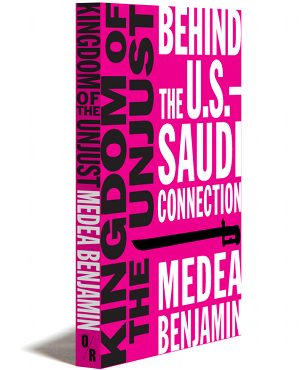
In Kingdom of the Unjust, Medea Benjamin shines a light on one of the most perplexing elements of American foreign policy: the strange alliance between between the U.S. and Saudi Arabia. More
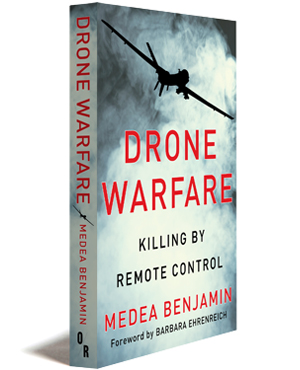
Drone Warfare
Killing by Remote Control
Medea Benjamin
“In this remarkably cogent and carefully researched book, Medea Benjamin makes it clear that drones are not just another high-tech military trinket. Drone Warfare sketches out the nightmare possibilities posed by this insane proliferation.” —Barbara Ehrenreich, author of Nickel and DimedMore
FINKS
How the C.I.A. Tricked the World’s Best Writers
Joel Whitney
When news broke that the CIA had colluded with literary magazines to produce cultural propaganda throughout the Cold War, a debate began that has never been resolved. Finks is a tale of two CIAs, and how they blurred the line between propaganda and literature. More
After the failed coup, Burhan Sönmez says there is “no stability in politics [or] social life” in Turkey. Does that mean there’s no hope for the future? Not so fast.
“Both parties are bad. One of them is the army, the other side is the government… The collision of these two forces will not bring democracy to Turkey.”
———————————————
An excerpt from Burhan Sönmez‘s interview with Deutsche Welle immediately following the attempted coup in Turkey:
Were you surprised by the attempted coup in Turkey?
I was very surprised and I believe the majority of society was surprised with this coup attempt, because the army and the government had been getting along very well with each other on almost every issue. No one expected this.
So how do you explain it suddenly happening then?
That’s the nature of Turkey. There is no stability in politics and in social life, so you can expect anything to happen at any time in society with the army and the government. This unexpected occurrence is just a result of it.
How are you reacting to the aftermath of the events?
What’s worrying is that two evil forces collided with each other last Friday. By evil force, I mean that both parties are bad. One of them is the army, the coup plotters, and the other side is the government, which is not good at applying democratic politics either. The collision of these two forces will not bring democracy to Turkey—so we are very worried.
Now, we have saved the parliamentary system, but that doesn’t mean we have saved the democratic system, because Erdogan is using this to escalate his politics, his personal ambition and his pro-Islam regime. That is worrying for us.
. . .
You have experienced police violence firsthand. Now, just after the coup, more attention is given to the way Erdogan is dealing with his opponents, but the situation has been difficult for many years already. Was there a particular moment when you realized that things were becoming more threatening for freedom of expression in the country?
It is a slow-motion change. For years and years, social media platforms like Twitter have been blocked every now and then. Yesterday, 10 news websites were blocked. They were not even affiliated with Fethullah Gülen. They were left-wing or social democratic news sites. This censorship is not something that will stop at a certain point. It will carry on for years and years. But we will carry on in favor of freedom of speech and democracy.
Your 2015 novel Istanbul Istanbul is about prisoners who try to find relief from the pain of torture through storytelling. Can storytelling inspire us for the future of Turkey?
In that novel, you can see that people are in pain, but they keep their faith in the future, they still have their dreams.
People like me, we’ve believed in this country for years and years. If you ask me if I’ve had a good year in this country, I will tell you, no. Every year has been worse than the previous one. But that means that our hopes are getting bigger than the previous year—otherwise you cannot survive here.
I will tell you something very unrealistic: I am very hopeful for the future of my country, otherwise I would have left. I’m still here; people like me are still standing here. We will carry on our calls for freedom, equality, solidarity, tolerance and also peace. We need these more than ever before. 1
———————————————
Library Journal also recently reviewed Sönmez’s novel, calling it “A real find; highly recommended”:
Four men inhabit a dank cell in Istanbul: the Doctor; the student Demirtay; troublesome Kamo the Barber; and Uncle Küheylan, an older man from the mountains who has always dreamed deliriously of coming to Istanbul. As they wait tensely for guards to drag out one of them for the next round of torture, they tell one another stories they already know, stories that take them beyond their cell walls to the larger world. From the wily nun who escapes a rapist to hunters trying to undo fate decreed by a fairy, these tales are engrossingly rendered, and they eventually lead to Istanbul itself, fighting to defend its beauty. An award-winning Turkish author and former lawyer, Sönmez spent five years in the UK being treated for injuries sustained in an assault by the Turkish police, and he captures the chill of anticipating torture with quiet authority. But his book is ultimately and persuasively about what imagination can do. 2
Below the ancient streets of Istanbul, four prisoners await their turn at the hands of their wardens. When they are not subject to unimaginable violence, the condemned tell one another stories about the city, shaded with love and humor, to pass the time. Istanbul Istanbul is a novel about creation, compassion, and the ultimate triumph of the imagination. More
REMEMBERING AKBAR
Inside the Iranian Revolution
Behrooz Ghamari
Set in the tumultuous aftermath of the Iranian revolution in 1979, Remembering Akbar weaves together the stories of a group of characters who share a crowded death row cell in Tehran’s notorious Evin prison. More
TALES OF TWO CITIES
The Best and Worst of Times in Today’s New York
John Freeman, editor
The stories in Tales of Two Cities mix fiction and reportage to convey the indignities and heartbreak, the callousness and solidarities, of living side-by-side with people who have a stupefyingly different income. More
“In Qatar, while exact figures are disputed, perhaps over a thousand workers, mostly South Asians, have died during construction for the World Cup. Employers hold onto passports of imported laborers and deport them if they get too restive, drawing on the massive human well created by the agricultural misery of South and Southeast Asia.
Such penury (rural South Asia holds nearly half the world’s poor) contrasts sharply with the opulence of the Gulf. In the desert cities of the peninsula, air conditioned skyscrapers contain ski slopes. Sand islands, built by European engineering firms, rise up from the sea. Meanwhile, the rights of those constructing these towers and islands are nearly nonexistent.
This maltreatment, and the attempts to resist it, are the topic of The Gulf: High Culture/Hard Labor, edited by Ross, a lustrously illustrated chronicle of the efforts by the Gulf Labor Coalition to throw sand in the machinery of the repression and exploitation confronting guest workers in the Gulf.”
“You talked about the dry run that was in 1999. It was actually two Saudis that were on their way to a party at the Saudi Embassy, with tickets paid for by the Saudi government, that tried to get into the cockpit twice, with an emergency landing, and then the FBI decided not to further investigate it. You mentioned Thumairy. Thumairy was allowed to go back to Saudi Arabia. When he was interviewed again in Riyadh in 2004, he denied that he had any contact with the hijackers, despite being presented with phone records. There are so many connections between individuals related to the Saudi government and these hijackers that it’s hard to even see why the U.S. government, whether it’s under the Bush administration or the Obama administration, continues to consider Saudi Arabia an ally. Of course, if you look deeper into it, you see things like $97 billion worth of weapon sales, so there’s a lot of money involved in this alliance.”
Read the story of Harold Pinter’s time in New York—and a little-known account of his Broadway debut
Barney Rosset’s championing of new theater at Grove Press in the late 1950s, including work by such playwrights as Eugène Ionesco, Tom Stoppard, Amiri Baraka, and Bertolt Brecht, would influence modern drama internationally for decades to come.
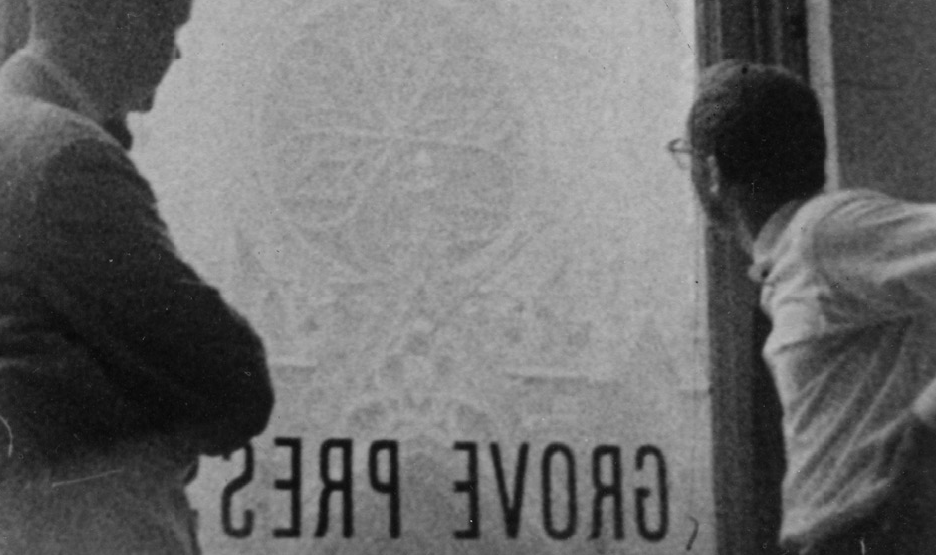
Of the many accomplishments of Barney Rosset at Grove Press—introducing such writers as Kenzaburō Ōe, Samuel Beckett, and Marguerite Duras to North America, battling American obscenity laws to publish unexpurgated editions of Lady Chatterley’s Lover and Henry Miller’s Tropic of Cancer, championing such legendary films as I Am Curious (Yellow) and Norman Mailer’s Maidstone—the production of new theater in the United States in the late 1950s would influence modern drama internationally for decades to come. The stable of playwrights Rosset developed—Jean Genet, Eugène Ionesco, Tom Stoppard, David Mamet, Amiri Baraka, William Inge, Václav Havel, Bertolt Brecht, and Harold Pinter—rendered Grove an estimable force in theater, perhaps more influential than any other publisher of the century. What follows is an account from Rosset’s long-awaited autobiography of the Broadway debut of Harold Pinter, and his time in New York with his publisher.
When we signed up Pinter, I remember very well that we had not yet seen one of his plays performed, but his scripts clearly showed his writing was brilliant. The way he used silence was reminiscent, to me, of Beckett—but different. There was an all-pervading sense of menace. The Dumb Waiter was a good example. Pure menace, terrifying, brilliant theater charged with a silent danger.
Pinter’s agent was Jimmy Wax. He and Harold were close friends. In New York they premiered The Homecoming on Broadway, but opening night was less than triumphant with many in the audience hating it. I remember asking Jimmy, “Who the hell did you invite to this opening?” I mean, at an opening when an author is already very well known, you can pick and choose whom you’re inviting—and you’re giving away many tickets. At least you ought to get people who might like the play. But on that first night one woman in the audience stood up and shouted in the middle of the first act: “Let’s get out of here, this is terrible!”
Pinter always talked and even acted as if he were a character in one of his plays. During the New York blackout of 1965, Cristina and I were in a Greenwich Village restaurant with Harold and my wife’s sister. Initially, when the lights went out, we thought that the blackout was confined to the restaurant and its immediate vicinity. I got my car from our nearby house, parked it facing the restaurant, and turned on the headlights so we could see to eat. The restaurant staff did not object. We slowly realized there was a total blackout extending as far as we could see uptown. Harold sat there silently for a long time, then suddenly said, “Does this happen very often here?” I waited for about three minutes before answering, as if we were in one of his plays, and then said, “Not often. Every twenty years or so.” Finally, Harold asked us to go back with him to his room at the luxurious, blacked-out Carlyle Hotel. We did and a city police officer carrying a flashlight escorted us up a back stairway. Back in his room, Harold read to us by candlelight a poem he had recently written. It was a memorable evening.
Pinter asked Beckett to critique everything he wrote, and Beckett liked Pinter both as a friend and as a writer, and paid him and his work close attention. The reverse was equally true.
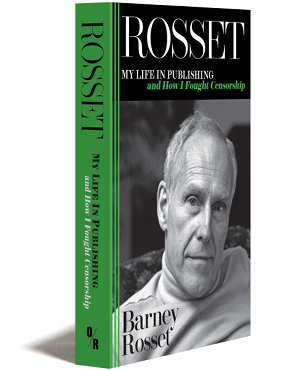
Grove Press publisher Barney Rosset began work on his autobiography a decade before his death in 2012. Now, at last, in his own words, we have a portrait of the man who reshaped how we think about language, literature—and sex. This is Barney Rosset, uncensored. More
ELEUTHÉRIA
Samuel Beckett
Before the classic Waiting for Godot, Samuel Beckett wrote Eleuthéria, many elements of which prefigure the themes and characters of Beckett’s most important plays. Beyond the historical interest of this “lost” work, there is also the mesmerizing quality of the master playwright’s language. More
SEVENTEEN & J
Two Novels
Kenzaburō Ōe
In Seventeen, the story of a lonely seventeen year old who turns to a right-wing group for self-esteem, and J, the story of a spoiled, young, drifter son of a Japanese executive, Ōe shows us a world where the values that had regulated life had vanished: what confronts his heroes now is a gaping emptiness. More
A self-portrait of the man who reshaped how we think about language, literature and sex
The renegade of 20th-century publishing, Barney Rosset, began work on his autobiography a decade before his death in 2012. Several publishers and editors later, it finally sees the light of day.
———————————————
“VIVID AND INFORMATIVE … a must for anyone interested in 20th-century American publishing and culture.” —Kirkus Reviews (starred review)
This “candid self-portrait” (Publishers Weekly) of “the one-in-a-million Barney Rosset, America’s bravest publisher” (Paul Auster) tells “a colorful and rollicking history” (Publishers Weekly) of the one person of whom it could be said he “represents the literary world of the latter half of the 20th century” (Kenzaburō Ōe).
Rosset is now shipping: only direct from OR Books. Not available on Amazon or in stores until January.
Further Reading
ELEUTHÉRIA
Samuel Beckett
Before the classic Waiting for Godot, Samuel Beckett wrote Eleuthéria, many elements of which prefigure the themes and characters of Beckett’s most important plays. Beyond the historical interest of this “lost” work, there is also the mesmerizing quality of the master playwright’s language. More
FINKS
How the C.I.A. Tricked the World’s Best Writers
Joel Whitney
When news broke that the CIA had colluded with literary magazines to produce cultural propaganda throughout the Cold War, a debate began that has never been resolved. Finks is a tale of two CIAs, and how they blurred the line between propaganda and literature. More
BLOOD SPLATTERS QUICKLY
The Collected Stories
Edward D. Wood, Jr.
Even if you think you don’t know him, you know him. Few in the Hollywood orbit have had greater influence; few have experienced more humiliating failure in their lifetime. Thanks in part to the biopic directed by Tim Burton, starring Johnny Depp and bearing his name, Ed Wood has become an icon of Americana. More
When the literary élite was sustained by the C.I.A.
The secret organization better known for its coups, assassinations, and spying activities underwrote literary and cultural institutions such as The Paris Review—often with the complicity of their editors and publishers.
In early 1966, Harold “Doc” Humes, one of the founders of The Paris Review, wrote a well-intentioned ultimatum to George Plimpton, another founder. Having left it to Plimpton to run the famous magazine long before, Humes was floundering. Living in London, where his wife Anna Lou had left him over the holidays, he was dogged by bouts of extreme paranoia and convinced that he was under surveillance. According to Anna Lou, he believed that the bedposts in his London home recorded whatever he said, and that the recordings were then played directly for Queen Elizabeth.
Yet in his March 1966 letter to Plimpton, he was clear and reasonable, writing that Peter Matthiessen, another Paris Review founder, had just visited London and had told Humes an astonishing story. During his stay, Matthiessen had admitted that “The Paris Review was originally set up and used as a cover for [Matthiessen’s] activities as an agent for the Central Intelligence Agency.” Humes continued,
He further said that you [Plimpton] knew nothing about this until recently, that in fact when he told you your face “turned the color of (my) sweater” which I hasten to inform you is neither red nor blue but a very dirty grey-white, my having worn nothing else since my wife left. It precisely matches my spirits; they get greyer every day.
Humes even sympathized. “I believe Peter when he says he is properly ashamed of involving the [Paris Review] in his youthful folly, and, true, this was all 15 years ago. BUT…”
Humes was just one of The Paris Review’s larger-than-life personalities. The magazine received early praise from American publications like Time and Newsweek, and also from magazines and newspapers all over Europe. It helped launch the careers of William Styron, Terry Southern, T.C. Boyle, and Philip Roth, among others. It threw legendary parties where, for decades, actors like Warren Beatty and political and cultural figures like Jackie Kennedy would rub shoulders with New York City’s writers and book publishing rank and file. Its editor-in-chief Plimpton was already a best-selling author, a friend of the Kennedys, one of Esquire magazine’s “most attractive men in America,” and, according to Norman Mailer, the most popular man in New York City. His personal entourage drew attention, too. A 1963 Cornell Capa photograph shows a group assembled for one of the famous cocktail parties in Plimpton’s apartment. In the picture are Truman Capote, Ralph Ellison, Humes, Matthiessen, Styron, Southern, and Godfather author Mario Puzo.
. . .
Arguing that an association with secret institutions like the C.I.A. would inevitably lead to “rot,” Humes advised Plimpton that, for the integrity of the magazine, he should make Matthiessen’s ties during the magazine’s founding public. Citing Edmund Burke’s line “that it is enough for evil to triumph that good men do nothing,” Humes wrote, “I have deeply believed in the Review and all that we hoped it stood for, but until this matter is righted I feel I have no honorable choice but to resolutely resign. Even if I have to split an infinitive to do it.” He went on to suggest that Matthiessen might” laugh the matter off in print in a manner calculated to restore our tarnished escutcheon…” Under these circumstances, he would stay. Barring that, however, “I should like my name removed from the masthead. I’m sure it will not be missed.”
In attempting to inspire his colleagues to come clean, Humes cited an opinion that grew increasingly common as revelations of the C.I.A.’s vast propaganda apparatus were published in Ramparts magazine and The New York Times in 1964, 1966, and 1967. Namely, that any association with the super-secret spy agency—notorious for coups, assassinations, and undermining democracy in the name of fighting communism—tainted the reputations of those involved. Humes pressed the point forcefully. “Since this was apparently a formal arrangement, involving his being trained in a New York safehouse and being paid through a cover name, then without doubt the fact is recorded in some or several dusty functionarys’ [sic] files in Washington or around the world that our hapless magazine was created and used as an engine in the damned cold war…” He continued,
although Peter is not [to] be blamed for a paranoid system that makes victims of its instruments, nevertheless what of Styron?… What of half the young writers in America who have been netted in our basket? What color would their faces turn?
———————————————
Of interest: Rear Window, Julian Stallabrass on the C.I.A.’s covert funding of Abstract Expressionist painters during the Cold War.
Further Reading
FINKS
How the C.I.A. Tricked the World’s Best Writers
Joel Whitney
When news broke that the CIA had colluded with literary magazines to produce cultural propaganda throughout the Cold War, a debate began that has never been resolved. Finks is a tale of two CIAs, and how they blurred the line between propaganda and literature. More
ROSSET
My Life in Publishing and How I Fought Censorship
Barney Rosset
Grove Press publisher Barney Rosset began work on his autobiography a decade before his death in 2012. Now, at last, in his own words, we have a portrait of the man who reshaped how we think about language, literature—and sex. This is Barney Rosset, uncensored. More
SEVENTEEN & J
Two Novels
Kenzaburō Ōe
In Seventeen, the story of a lonely seventeen year old who turns to a right-wing group for self-esteem, and J, the story of a spoiled, young, drifter son of a Japanese executive, Ōe shows us a world where the values that had regulated life had vanished: what confronts his heroes now is a gaping emptiness. More
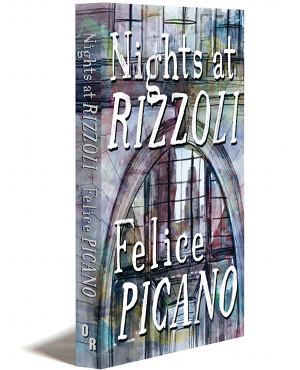
NIGHTS AT RIZZOLI
Felice Picano
Glamour and books don’t often converge, but they did at Rizzoli, one of New York City’s greatest bookstores: a memoir by a writer (and Rizzoli manager) who lived the unchecked, wild life of a young gay man in pre-AIDS, post-Stonewall 1970s New York. More
How to support Chelsea Manning in the wake of her recent hospitalization:
DEMAND SAFE LIVING CONDITIONS AND MEDICAL TREATMENT.
Chelsea Manning has been fighting to receive urgent medical care for years. Though she managed to secure access to hormone therapy after a lawsuit against the Department of Defense, she (against the advice of her military doctors) is being forced to conform to male grooming standards. The Department of Justice claimed this was due to “safety concerns”, but as Manning’s lawyer Chase Strangio countered: “There is no question that Chelsea already stands out in a men’s facility – there is likely not a person there who does not know who she is or that she is a woman.”
Fight for policy changes that will ensure the safety of trans prisoners, from fair
sentencing to critical health policy.
SUPPORT CHELSEA’S APPEAL
As the Court Martial Appeal Brief, filed May 18 of this year notes, “No whistleblower in American history has been sentenced this harshly”. Despite incendiary claims that Wikileaks “has blood on its hands”, government witnesses found no examples of any deaths resulting from the leaks. As her appeals process is now underway, funds are desperately needed to cover the legal expenses involved. Donate here.
WRITE! Chelsea has noted that letters are a great source of comfort, stating ““I am happily reminded that I am real and that I do exist for people outside this prison.”
Chelsea’s address is as follows:
CHELSEA E. MANNING 89289
1300 NORTH WAREHOUSE ROAD
FORT LEAVENWORTH, KANSAS 66027-2304
Guidelines detailing what sort of mail Chelsea is able to receive can be found here.
“Ashley Dawson, professor of English at the College of Staten Island, City University of New York, and author of the new book, Extinction, a Radical History, joins Democratic Perspective regulars Mike Cosentino, Gary LaMaster, and Steve Williamson, for a discussion of the toll human exploitation has taken on Earth’s biodiversity. What does it imply for our future that in the past fifty years alone, 40% of the planet’s species have disappeared? The inescapable answer: we have to change our perspective. Simply put, the ruthless exploitation of natural resources has limits. If we refuse to acknowledge them, we may wind up without a home.”